E-A-T Explained: Why Google Cares About Your Reputation (2026)
Table Of Contents
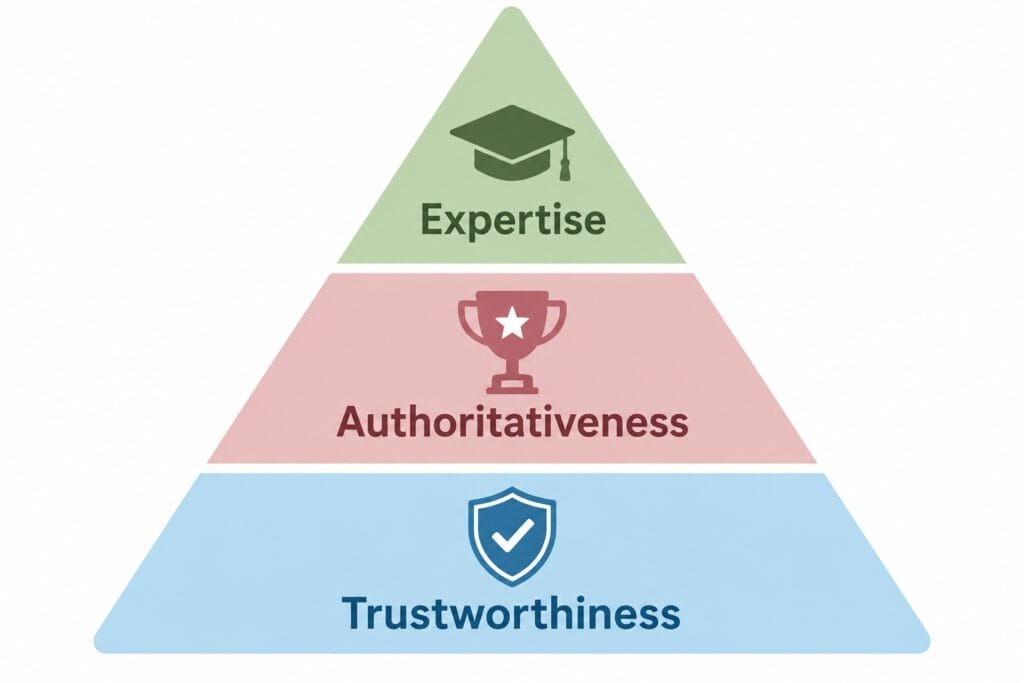
E-A-T stands for Expertise, Authoritativeness, and Trustworthiness. It is not a direct ranking factor, but it influences how Google evaluates content quality, especially for Your Money Your Life (YMYL) topics. If you are in health, finance, legal, or e-commerce, E-A-T can make or break your rankings.
What Is E-A-T and Why Does It Matter?
Google introduced E-A-T in its Search Quality Evaluator Guidelines. Human evaluators use it to assess whether search results meet user needs. While E-A-T is not a direct algorithm signal, it shapes how Google trains its algorithms to identify quality content.
The three components:
Expertise: Do You Know What You Are Talking About?
Expertise means having deep knowledge in your field. For a medical site, this means doctors write the content. For a cooking blog, it means experienced chefs share recipes. For an LED manufacturer, it means engineers explain technical specifications.
How to demonstrate expertise:
Show author credentials and experience
Include detailed technical explanations that only an expert would know
Cite authoritative sources and research
Cover topics comprehensively, not superficially
Authoritativeness: Does the Industry Recognize You?
Authoritativeness is about reputation. It is not what you say about yourself, but what others say about you. Do other sites link to you? Do industry publications mention you? Do customers trust your brand?
How to build authoritativeness:
Earn backlinks from reputable sites in your industry
Get mentioned in industry publications and news
Build a brand that people search for directly
Create original research, data, or insights that others reference
Trustworthiness: Can Users Trust You?
Trustworthiness is about security, transparency, and accuracy. Users need to feel safe on your site, and Google needs to verify that your content is reliable.
How to build trustworthiness:
Use HTTPS encryption
Display clear contact information and physical address
Have a transparent privacy policy and terms of service
Show customer reviews and testimonials
Correct errors quickly and update outdated content
Avoid misleading claims and clickbait
E-A-T for E-Commerce and B2B Sites
If you sell products online, E-A-T affects your ability to rank for commercial keywords. Here is how to apply it:
Product Pages
Include detailed specifications written by knowledgeable staff
Add high-quality images and videos showing the product in use
Display customer reviews and ratings prominently
Link to manufacturer certifications and safety standards
Show return policies and guarantees clearly
About Page
Your About page is a trust signal. Do not make it a generic template. Include:
Company history and mission
Team photos and bios with credentials
Manufacturing process and quality control
Certifications and awards
Contact information and physical location
How to Improve Your E-A-T Score
Improving E-A-T is a long-term investment. Here is my action plan:
1. Audit Your Current Content
Review your top 20 pages. Ask:
Does this show expertise, or is it generic?
Would a competitor with more expertise outrank this?
Is the information accurate and up-to-date?
2. Build Author Profiles
Every piece of content should have a named author with a bio. The bio should include:
Relevant credentials and experience
Links to professional profiles (LinkedIn, Twitter)
Photo of the actual person
Other articles they have written on your site
3. Earn Quality Backlinks
Backlinks are the strongest authority signal. Focus on:
Guest posts on reputable industry sites
Original research that journalists want to cite
Partnerships with industry associations
Press releases for genuine company news
4. Keep Content Fresh
Stale content hurts trust. Set a schedule to review and update:
Core pages: Every 6 months
Blog posts: Every 12 months
Product pages: When specifications change
Add ‘Last updated’ dates to show freshness
Summary
E-A-T is not a quick fix. It is a long-term strategy that requires consistent effort across expertise, authority, and trust.
Focus on creating genuinely expert content, building real authority through backlinks and mentions, and establishing trust through transparency and security.
In competitive niches, E-A-T is often the difference between page one and page two. Invest in it early and consistently.