How to Hire and Train SEO Writers Who Actually Deliver (2026)
Table Of Contents
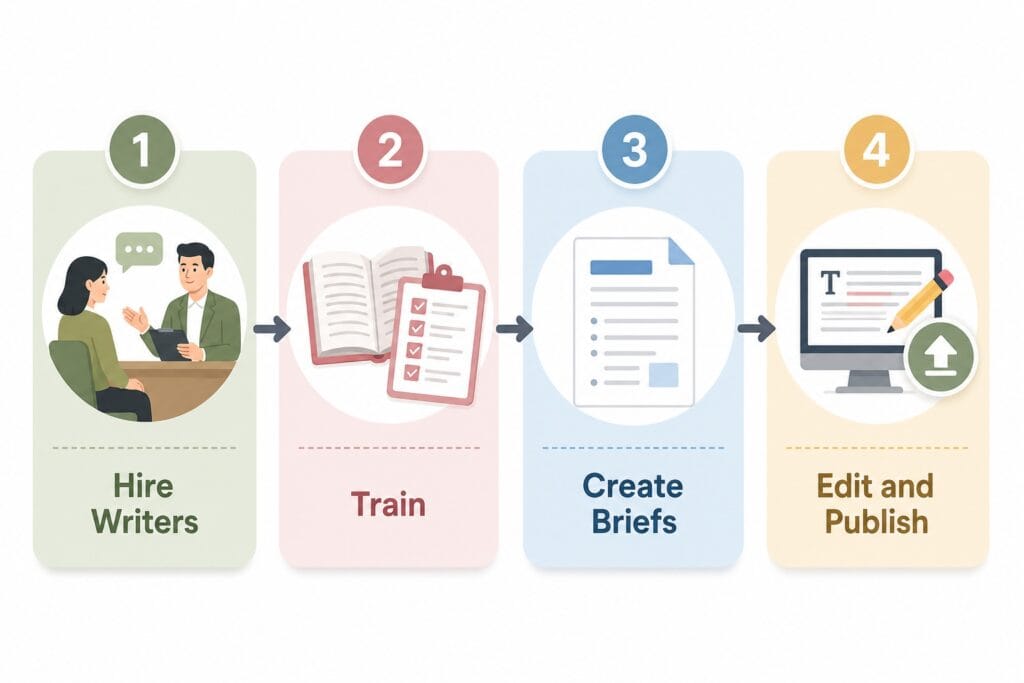
I have hired dozens of writers over the years. Some were brilliant. Others were disasters. The difference was never just talent — it was the hiring process, training, and management. A mediocre writer with a great process outperforms a talented writer with no direction.
Why Most SEO Content Fails
Most businesses hire writers, give them a keyword, and expect magic. The result is generic content that ranks for nothing and converts nobody. The problem is not the writers. It is the lack of a system.
Common failures I see:
Writers do not understand the target audience
No clear brief or content outline provided
Content is written for search engines, not humans
No quality control or editing process
Writers are not trained on the brand voice or industry specifics
This section fixes that. Here is the system I use to hire, train, and manage SEO writers who produce content that ranks and converts.
How to Hire SEO Writers
Step 1: Define What You Actually Need
Before posting a job, define your requirements. Not all SEO writers are the same.
Ask yourself:
What topics will they cover? (Technical, lifestyle, B2B, e-commerce?)
What content types? (Blog posts, product descriptions, guides, whitepapers?)
What is your budget? (Quality scales with price. $0.03/word gets fluff. $0.15+/word gets expertise.)
How much volume? (One post per week or ten?)
Do they need industry expertise or can they learn? (Medical writers need credentials. Lifestyle writers can research.)
Step 2: Write a Job Post That Attracts the Right People
Your job post is a filter. Be specific about what you want and what you do not want.
Include in your job post:
Specific niche or industry experience required
Sample topics you will assign
Word count range and rate per word or per article
Whether you provide briefs or expect them to research
Turnaround time expectations
Request for 2-3 relevant writing samples (not generic portfolio pieces)
Red flags to avoid:
Vague posts like ‘looking for content writers’ — you will get 500 generic applicants
Unrealistic rates — quality writers will not apply
No mention of SEO — you will get journalists who do not understand optimization
Step 3: Evaluate Applications with a Test Assignment
Never hire based on a portfolio alone. Portfolios are curated. A paid test assignment reveals actual skill.
My test assignment process:
Pay for the test (500-1000 words, full rate). Free tests attract desperate applicants, not professionals.
Give a real brief, not a generic topic. Use an actual article you need written.
Include specific requirements: target keyword, word count, tone, structure, and 2-3 internal links to include
Evaluate on: research depth, writing quality, SEO optimization, adherence to brief, and turnaround time
I usually test 3-5 writers per hiring round. One stands out. That is your hire.
How to Train SEO Writers
Create a Writer’s Handbook
Every writer needs a reference document. I create a 10-20 page handbook for each project or client. Include:
Brand voice guide: Formal or casual? Technical or accessible? First person or third?
Audience persona: Who is the reader? What do they know? What are their pain points?
SEO requirements: Keyword usage rules, header structure, internal linking guidelines, meta description format
Content templates: Outline structures for different content types (guides, listicles, product reviews, comparisons)
Examples of good and bad work: Show, do not just tell. Include annotated examples.
Prohibited practices: Plagiarism, AI-generated content without disclosure, keyword stuffing, making claims without sources
Provide Detailed Briefs for Every Assignment
A good brief is 80% of the work. A bad brief guarantees a bad article. Here is my brief template:
Brief Template:
Title/Topic: Working title or topic area
Target Keyword: Primary keyword + 2-3 secondary keywords
Search Intent: Informational, commercial, transactional? What does the user want?
Word Count: Target range
Outline: H2 and H3 headers with bullet points for each section
Key Points to Cover: Specific facts, data, or angles that must be included
Internal Links: 3-5 pages to link to, with suggested anchor text
External Sources: 2-3 authoritative sources to reference
CTA: What action should the reader take?
Competitor Examples: Links to 2-3 top-ranking articles to beat
Review and Feedback Process
The first 3-5 articles from a new writer need detailed feedback. Do not just accept or reject. Annotate specific issues and explain why.
My feedback framework:
What worked: Start with positive feedback. Writers need to know what to keep doing.
What needs improvement: Be specific. ‘The introduction is weak’ is useless. ‘The introduction needs a hook that addresses the reader’s pain point directly’ is actionable.
SEO issues: Keyword placement, header structure, internal links, meta description
Revision instructions: Exactly what to change and why
After 5 articles, most writers understand your expectations. Feedback becomes lighter. But never stop reviewing entirely.
Managing Writers at Scale
Once you have multiple writers, you need systems. Here is what works for me:
1. Use a Content Calendar
Plan 4-8 weeks ahead. Assign topics, deadlines, and writers. Tools like Trello, Asana, or Monday.com work well. I prefer a simple Google Sheet with columns: Topic, Writer, Due Date, Status, Published Date, URL.
2. Implement an Editorial Workflow
Every article should go through stages:
Writer submits draft
Editor reviews (SEO, accuracy, tone, grammar)
Writer revises (if needed)
Final approval
Formatting and publishing
Post-publish promotion (social, email, outreach)
3. Track Performance and Provide Feedback
After 30 days, check Google Search Console for each article. Which writers’ content ranks? Which gets traffic? Share this data with your team. Writers who know their work is measured produce better work.
Summary
Hiring SEO writers is not about finding magical talent. It is about building a system that produces consistent quality. Define your needs. Test thoroughly. Train with a handbook and detailed briefs. Review and feedback relentlessly. Manage with calendars and workflows.
A great writer with a bad process fails. A decent writer with a great process succeeds. Build the process first.
Content is a long game. Invest in your writers, and they will invest in your success.