Content Marketing for SEO: How to Create Content That Ranks and Converts (2026)
Table Of Contents
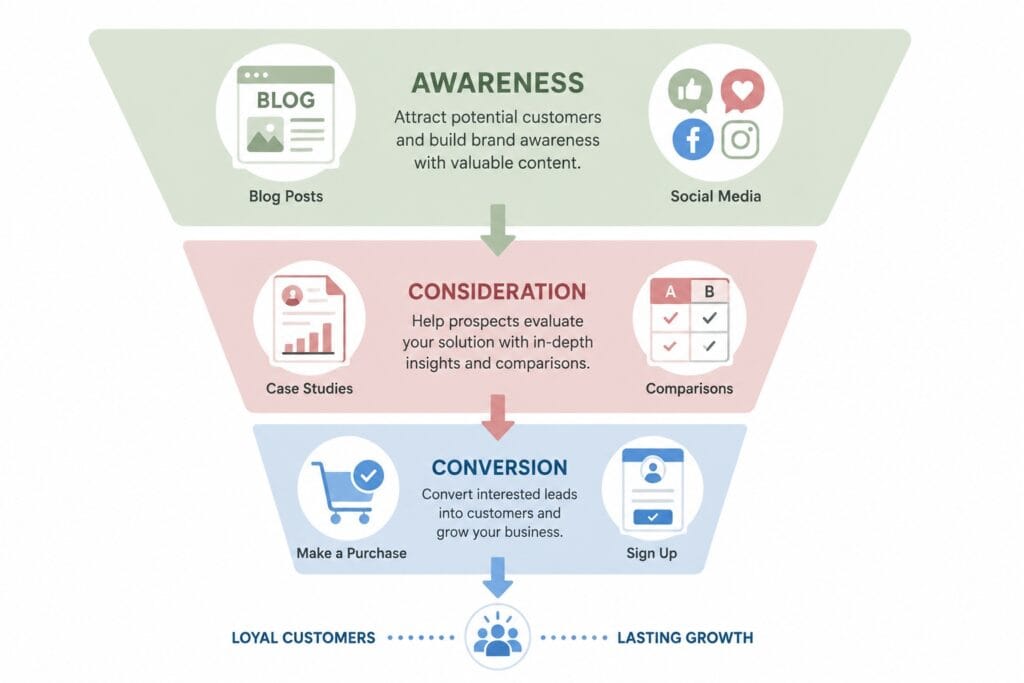
Content marketing and SEO are inseparable. You can’t rank without content, and content won’t perform without SEO. This guide shows how to create content that satisfies both Google and your customers, based on years of writing and optimizing content for B2B and e-commerce sites.
Why Content Is the Foundation of SEO
Google’s job is to match search queries with the best content. If you don’t have content, you can’t rank. It’s that simple.
But not all content is equal. The internet is full of thin, copied, or useless content that never ranks. To win, you need content that:
Answers real questions your customers ask
Provides depth that competitors don’t match
Demonstrates your expertise and builds trust
Converts readers into leads or customers
I’ve seen businesses spend thousands on link building while their content was thin and generic. Fix the content first. Everything else becomes easier.
3 Types of Content That Actually Drive SEO Results
1. Educational Content (Answer Questions)
This is the ‘how-to’ and ‘what-is’ content. It targets informational search intent and brings in top-of-funnel traffic.
Examples:
‘How to choose LED strip lights for outdoor use’
‘What is the difference between 5050 and 3528 LED chips?’
‘LED strip light installation guide for beginners’
This content rarely converts directly, but it builds authority and captures people early in their research process.
2. Commercial Content (Compare and Convert)
This content targets people who are close to buying. They want comparisons, reviews, and validation.
Examples:
‘Best LED strip light manufacturers in China (2026)’
‘LED strip light vs rope light: Which is better for outdoor use?’
‘[Brand] LED strip light review: Worth the price?’
This content converts better but has lower search volume. It’s where the money is.
3. Pillar Content (The Ultimate Guide)
Pillar content is comprehensive, long-form content that covers a topic completely. It targets broad keywords and links to more specific cluster content.
Examples:
‘The Complete Guide to LED Strip Lights: Types, Uses, and Installation’
‘LED Lighting for Commercial Spaces: Everything You Need to Know’
‘How to Start an LED Lighting Business: From Sourcing to Sales’
Pillar content takes more time to create but pays dividends for years. It’s the foundation of your content strategy.
[Image: Content types pyramid showing educational, commercial, and pillar content]
How to Research Content That Actually Ranks
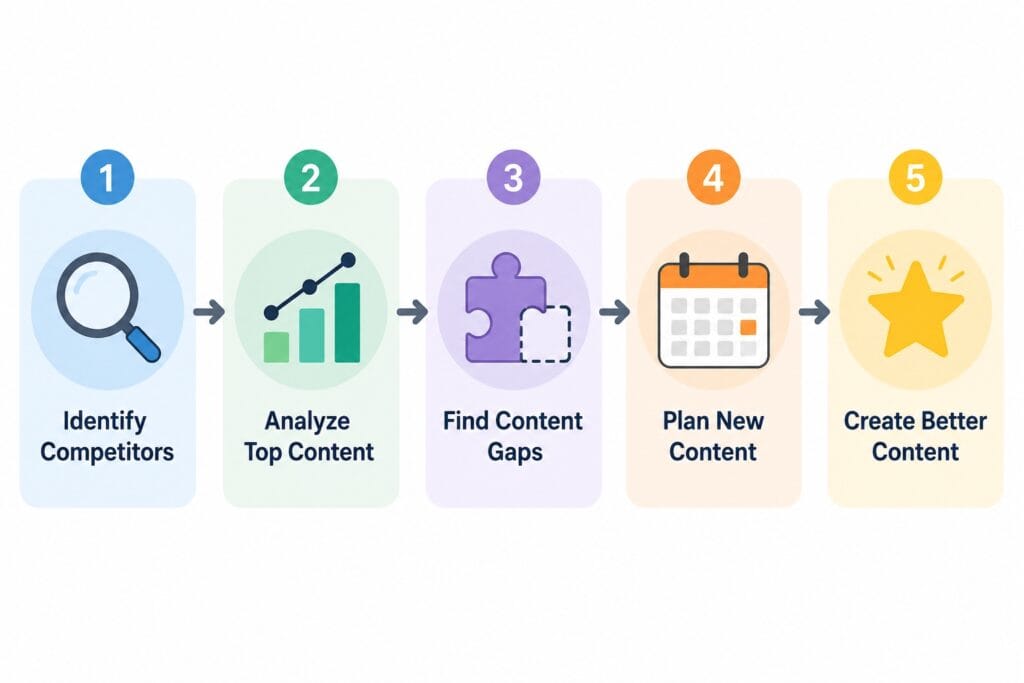
Before writing a single word, you need to know what content is already ranking. This isn’t about copying — it’s about understanding what Google considers the best answer.
My research process:
Search your target keyword in Google
Open the top 5 results in separate tabs
Analyze what each covers (word count, sections, media)
Identify gaps — what are they missing?
Plan content that covers everything they do, plus what they don’t
This takes 30 minutes per article but saves hours of rewriting later. It also ensures your content has a real chance to outrank existing results.
How to Write Content That People Actually Read
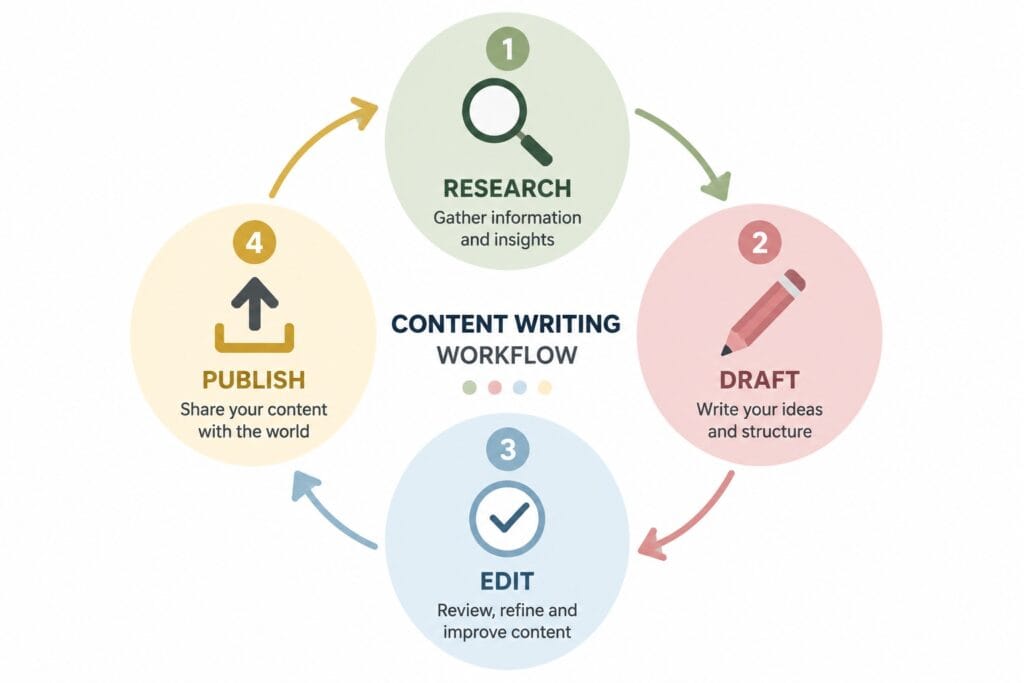
Most business content is boring. It’s written for the company, not the reader. To stand out, you need to write like a human helping another human.
My writing rules:
Start with the reader’s problem. Hook them in the first sentence.
Use short paragraphs (2-3 sentences max). Big walls of text scare readers away.
Include specific examples and data. ‘We increased traffic by 150%’ beats ‘we got great results.’
Add images, tables, and lists to break up text.
End with a clear next step. Tell the reader what to do next.
I write all my first drafts quickly — usually in one sitting. Then I edit ruthlessly. The editing is where good content becomes great.
How to Hire Writers (Without Getting Garbage Content)
At some point, you can’t write everything yourself. You need to hire writers. But most freelance writers produce generic content that doesn’t rank.
How to find good writers:
Look for writers in your niche, not generalists
Ask for samples in your industry
Start with a small test project (1 article)
Pay well. Good writers aren’t cheap. Cheap writers aren’t good.
How to brief writers properly:
Give them the target keyword and search intent
Provide an outline with H2s and H3s
Show them the top-ranking articles as references
Set clear expectations for word count, tone, and deadline
I spend more time on the brief than the writer spends on the article. A good brief is 80% of the work.
[Image: Writer hiring process showing test project to full contract]
Content Calendar: Plan 6 Months Ahead
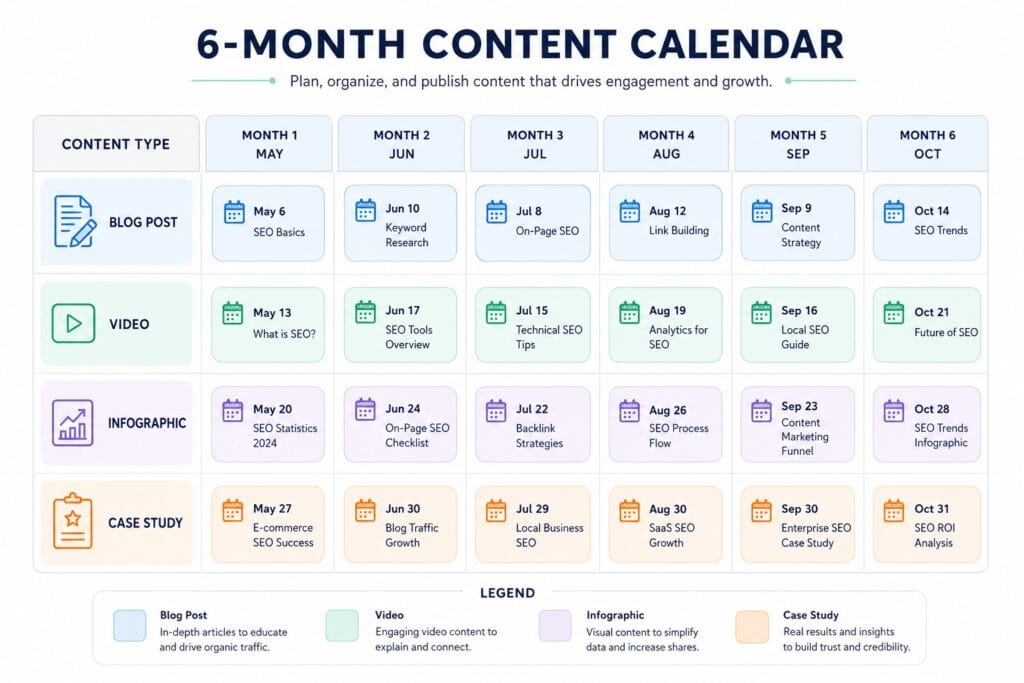
Random publishing doesn’t work. You need a plan that aligns with your business goals, seasonal trends, and customer needs.
My content calendar framework:
Month 1-2: Pillar content (2-3 comprehensive guides)
Month 3-4: Cluster content (6-8 articles supporting pillars)
Month 5-6: Update and optimize existing content
Ongoing: 1-2 new articles per week, plus social promotion
I use a simple Google Sheet for planning. Each row is an article with columns for keyword, due date, author, status, and publish date.
Link Building: How to Get Other Sites to Link to Your Content
Links are still one of the strongest ranking signals. When a reputable site links to you, Google sees it as a vote of confidence.
Link building strategies that work:
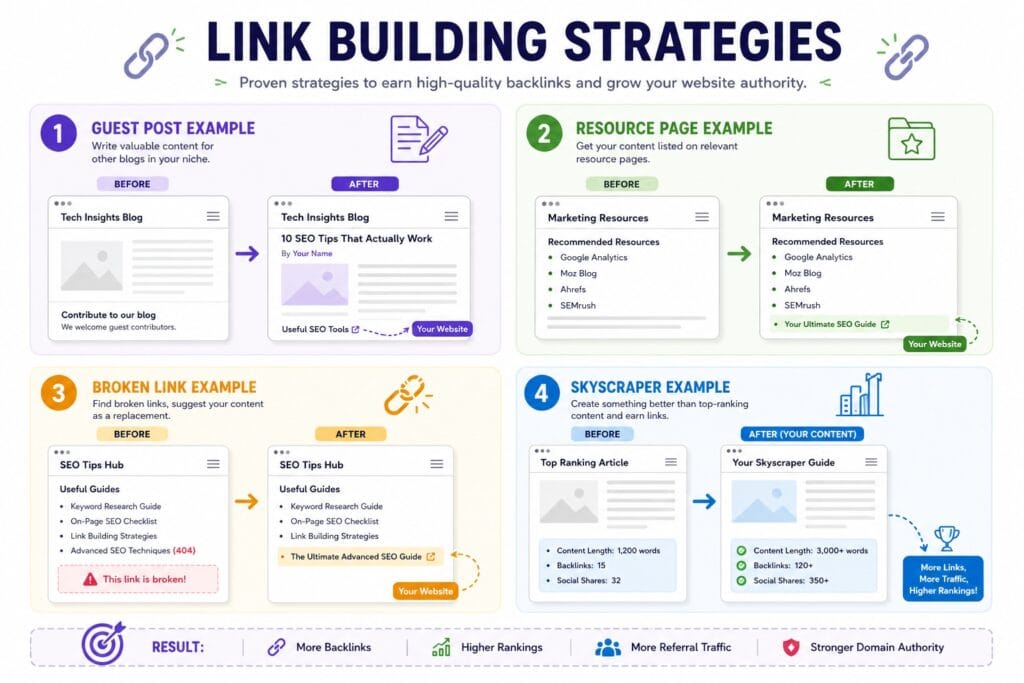
Guest posting: Write for industry blogs. Include a link back to your site in the author bio or content.
Resource pages: Find pages that list resources in your niche. Suggest your content as an addition.
Broken link building: Find broken links on relevant sites. Offer your content as a replacement.
Original research: Publish data, surveys, or studies. Other sites will cite your research.
Infographics: Create visual content that’s easy to share and embed.
I focus on quality over quantity. One link from a respected industry site is worth more than 100 links from random blogs.
Content Audit: Update Old Content for New Rankings
Most people focus on creating new content while ignoring old content. But updating existing content often delivers faster results than writing something new.
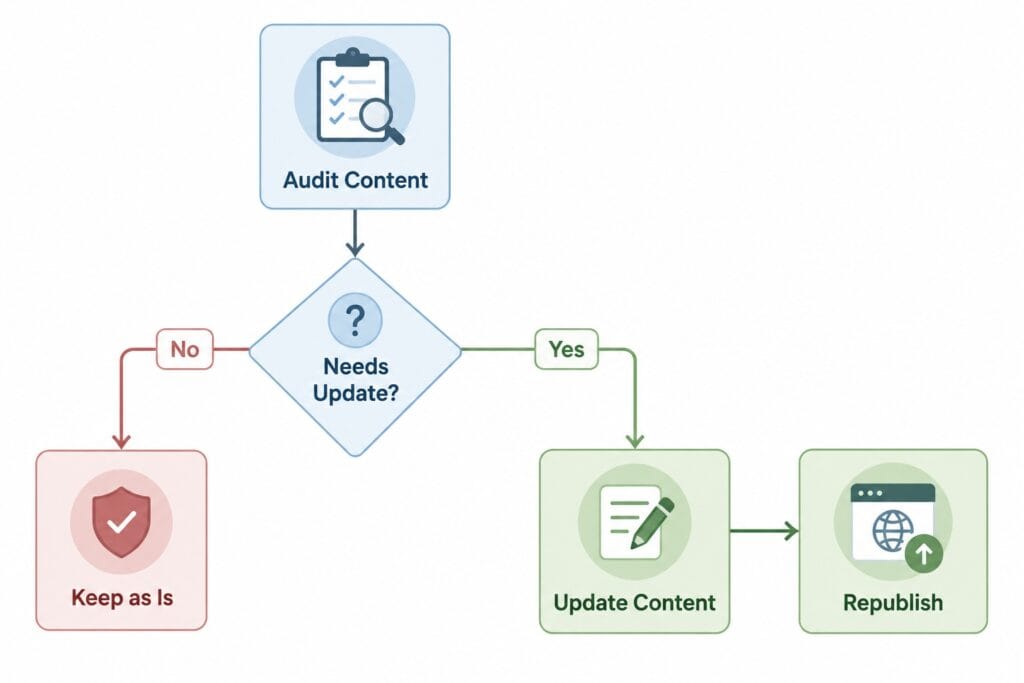
My audit process:
Find pages ranking on page 2 (positions 11-20)
Update statistics, examples, and screenshots
Expand thin sections with more detail
Improve readability with better formatting
Add internal links to newer related content
I audit content every 6 months. Pages that were updated consistently outrank competitors who let their content go stale.
Summary: Your Content Marketing Roadmap
Content marketing isn’t about publishing daily. It’s about publishing strategically, promoting consistently, and updating regularly.
Your 90-day plan:
Days 1-30: Research, plan, and create 2 pillar pieces
Days 31-60: Create 4-6 cluster articles supporting your pillars
Days 61-90: Promote content, build links, and start auditing old content
Ongoing: Publish 1-2 articles per week, update old content monthly
Start with one pillar article. Do it well. Then build around it. Quality content compounds over time.